.png)

Pet owners turn elsewhere as food costs rise
PRIEST RIVER — Cindy Knudsen has seen so many people lose weight from eating less. Most of them just can’t afford enough food — not only for themselves, but for their pets.
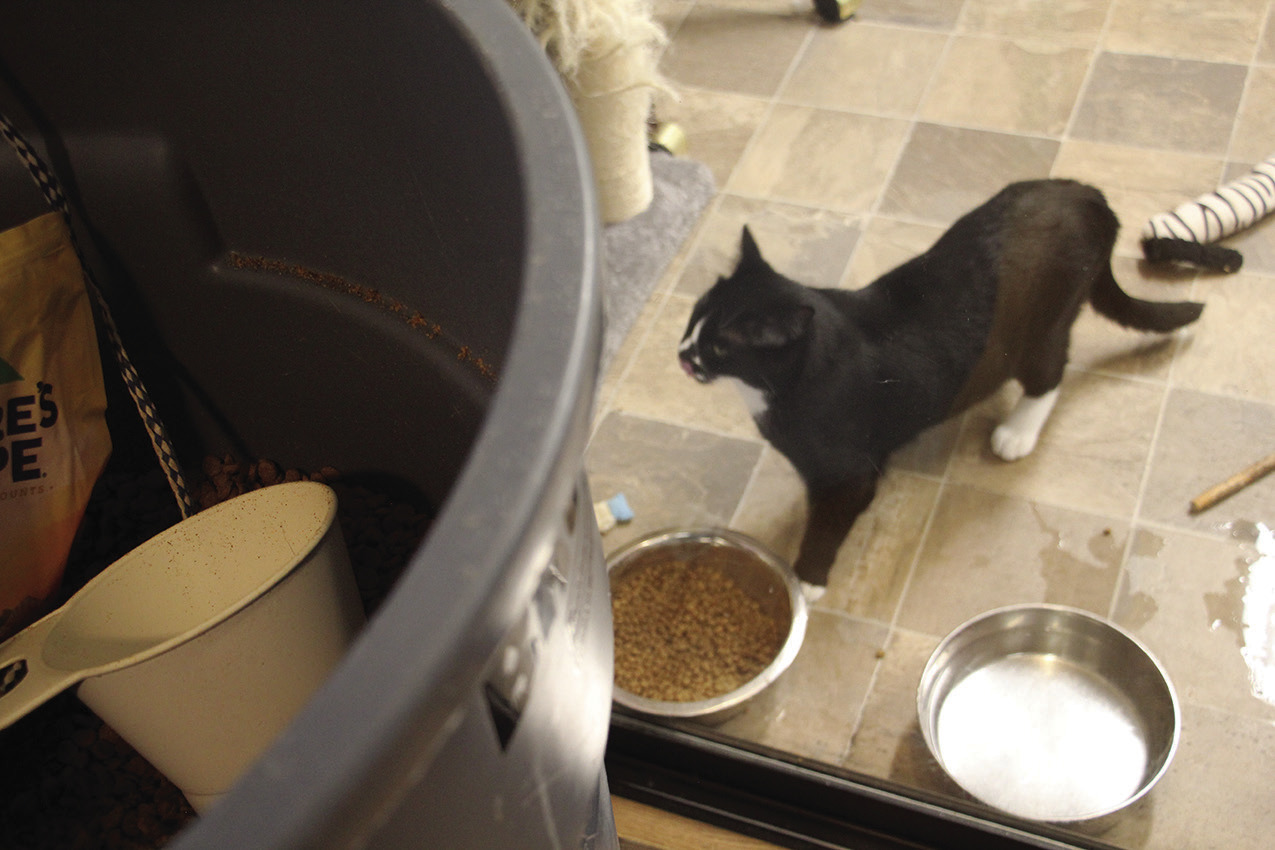
Knudsen is the president of the Pawsitive Outreach Spay/Neuter Advocates, one of the few animal welfare organizations based in Pend Oreille or West Bonner County. Though Pawsitive Outreach mainly operates as a cat shelter that delivers spay, neuter and adoption services at reduced prices, Knudsen said they have also assisted pet owners by giving them pet food.
“I’ve heard so many times, people have told us, ‘Before I was aware of you, I would lay awake at night,’” Knudsen said.
“‘I could barely feed the [pets] I had, and I knew there’d be more really soon. I didn’t know what I was going to do, I could not sleep. I was just really stressed out.’” Pawsitive Outreach isn’t alone. With costs increasing and food assistance programs experiencing cuts under President Donald Trump’s administration, many lower-income pet owners must rely on animal welfare and other organizations to meet their pets’ needs, such as pet food and veterinary care.
Besides Pawsitive Outreach, such organizations include the Priest River Animal Rescue, the Priest River and Priest Lake food banks and Angel Paws of Pend Oreille County.
“Everybody hits a rough spot,” said Julie-Ann Hojan, a Priest River Animal Rescue volunteer. “And we don’t want to see any dogs or cats suffer.”
Though Priest River Animal Rescue has yet to note an increase in clientele for its community food program, about 15 clients from early September to late October took dog food, cat food or both from the rescue. Some clients, Hojan added, were program regulars.
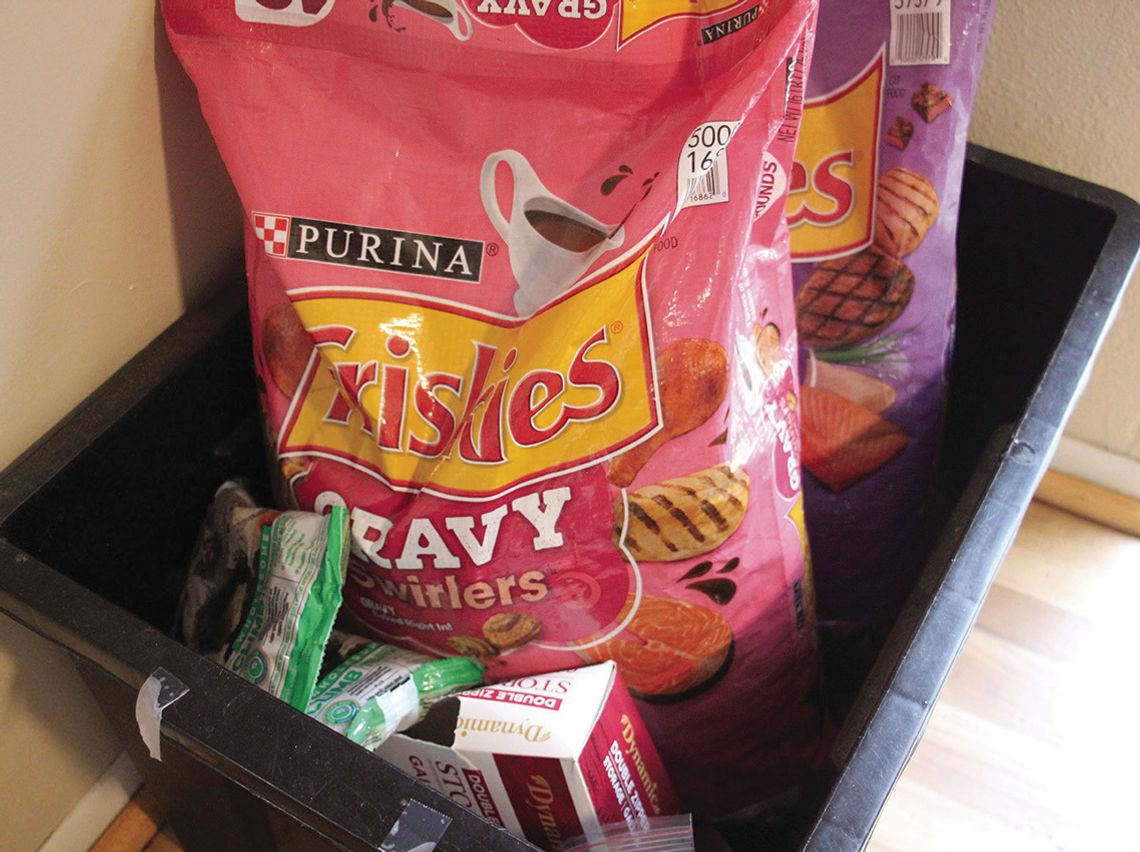
Similarly, about 15 of the over 60 households in the Priest Lake Food Bank’s clientele take pet food, which the food bank offers alongside non-pet food on the two days it’s open each month.
At Priest River Animal Rescue, clients are limited to 2 gallons of dog food and 1 gallon of cat food per visit. Clients at the Priest Lake Food Bank have the same limit on cat food, though dog food is limited to 1 gallon.
Priest River Animal Rescue tracks pet food clients, but much like surrounding food banks and pantries, it does not require them to list a reason for their visit — only a name, signature, date and indication of what pet food they were taking that day.
“I would think it’s none of our business,” Hojan said. “It’s just turning around being here for the community who’s helped us so much.”
Almost all the pet food available at Priest River Animal Rescue and the Priest River and Priest Lake food banks are donations from the community. One longtime donor is Priest River Pets, which donates up to 240 pounds of pet food every three months to Priest River Food Bank or Priest River Animal Rescue. Owner Jim Sampson said that pet food is either damaged or close to expiration, yet high quality.
“As long as it’s been stored properly, the food is still completely good for a dog for three or four years after that expiration date,” Sampson said.
Pet food at Priest River Pets has also increased in cost by 25–30% since a few years ago, Sampson said. Those costs may continue to increase depending on the cost of ingredients like beef and eggs, among other factors. To save money, Sampson advises lower-income pet owners to invest in high-quality pet food; it’s more expensive, he said, but lasts longer than low-quality pet food.
“It’s the same theory as if you eat a balanced meal compared to eating Fritos or Doritos or something,” Sampson said. “Chips, sure they taste good for a while, but they aren’t going to fill you up.”
From pet food to veterinary care, increasing pet ownership costs contribute to intakes at shelters and rescues across the country, including Priest River Animal Rescue.
As previously reported by The Miner, many of the dogs and cats now at Priest River Animal Rescue are not strays, but pets that were surrendered by their owners.
For some pet owners, their pets are “their lifeline, what gives them a reason to get up in the morning,” Knudsen of Pawsitive Outreach said.
That’s especially true for elderly pet owners living in rural areas like the Pend Oreille River Valley on fixed incomes.
Providing pet owners pet food for free allows them to use that income on other expenses, such as food for themselves.
“Pets are important to people,” said Michele Walker, both a Priest River Animal Rescue and Priest Lake Food Bank volunteer. “And if you’re having a tough time, the last thing you want to do is have to say, ‘I gotta get rid of my pet because I can’t afford to feed it.’”