.png)

NEWPORT - Behind every successful emergency response is a network of quiet preparation most residents never see—people training, testing gear, and building habits that matter when everything else goes dark.
That quiet work in Pend Oreille County now has a clear focal point.
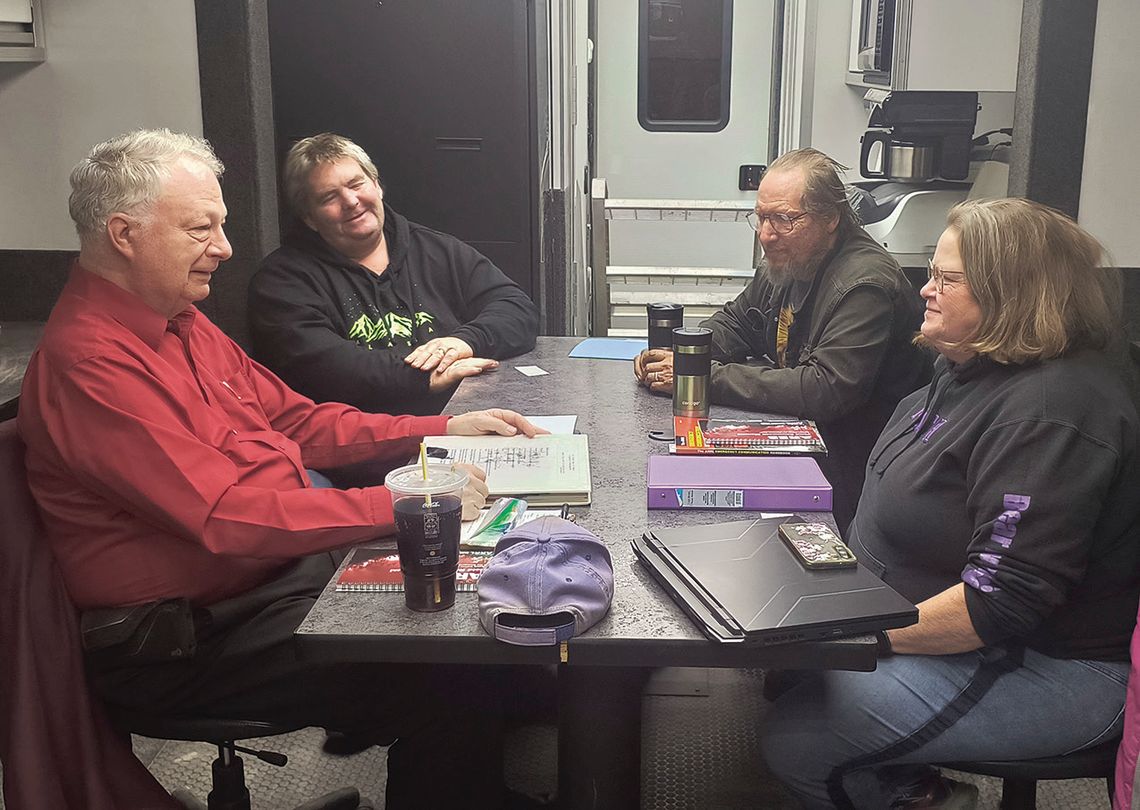
Jennie Zubaugh has been installed as the county’s Amateur Radio Emergency Service (ARES) emergency coordinator, stepping into the leadership role that helps organize volunteer emergency communications when phones, internet and normal systems are strained or unavailable.
The installation took place during a local ARES meeting attended by volunteers, county partners, and regional leadership from Eastern Washington ARES.
Pend Oreille County’s ARES story carries familiar names for longtime residents and responders.
The late Gus Estas helped shape early involvement. After his passing, Pat Molvik carried the work forward.
When Molvik died, there was concern the structure could fade.
That’s when Search & Rescue Captain John Seibert looked for someone willing to hold the center line.
“I asked her to step up,” Seibert said. “We needed someone who understood both the radio side and the responsibility that comes with it.”
Already active in emergency efforts alongside her husband Lance Zubaugh, Jennie agreed to take on the role.
To support and formalize the transition, Frank E. Hutchison (AG7QP/ WRDI529)—Eastern Washington Section Emergency Coordinator— attended in person to confirm the appointment process, answer questions, and provide guidance on training and readiness.
To people outside the hobby, amateur radio can look like a niche interest—call signs, signal reports, and weekly check-ins.
But ARES exists for a specific purpose: to provide reliable communication support when traditional systems fail, overload, or become unreliable. In rural counties with long distances, steep terrain, and winter disruptions, that gap can appear quickly.
During incidents that interrupt normal communications, trained amateur operators can: * Relay situational reports when phones and internet are down * Support Emergency Management and partner agencies with accurate, time-stamped information * Assist shelters and community coordination points * Provide structured communication that replaces rumor with verified reporting Hutchison emphasized that emergency communications is not just about equipment—it’s about habits and relationships built long before the moment of need.
“Disaster is a poor time to be handing out business cards,” he told the group.
A major focus of the meeting was practical readiness: training pathways, documentation, and ways to build a deeper bench of capable operators.
Weekly radio nets are a training ground for real incidents and Zubaugh encouraged members to step up and rotate roles so the system doesn’t depend on one person. If an EC can’t run a net due to other commitments, trained alternates keep the county’s weekly practice and accountability intact.
Members compared FEMA/ICS coursework, transcripts, and the updated ARRL task book requirements, with emphasis on keeping records organized so competencies can be signed off efficiently.
Hutchison highlighted Winlink as a key tool for “professional-grade” reporting—especially standardized templates such as a field situation report that can be rapidly collected and mapped, giving agencies a clearer picture of conditions across a region.
A recurring theme was that ARES volunteers may be unpaid, but the expectation in a real incident is competence— clear reporting, dependable behavior, and the ability to integrate with agency needs.
Pend Oreille County’s geography makes it beautiful— and complicated.
Valleys, mountains, and winter weather can interrupt coverage and power.
During storms, wildfires, and other disruptions, communication isn’t a convenience; it becomes infrastructure.
ARES offers something uniquely valuable: a small team that can mobilize quickly, self-sustain with battery power, and maintain information flow even when normal systems are unstable.
“The power isn’t just in the equipment,” Hutchison said. “It’s in the relationships and the habits you build ahead of time.”
With Zubaugh now serving as Pend Oreille County’s ARES Emergency Coordinator, the local focus turns to building depth and consistency: * Strengthening participation in weekly nets and practical on-air skills * Training alternates in net control and reporting procedures * Increasing Winlink comfort for those who can use it (and helping others learn) * Coordinating with county partners so ARES remains integrated—not improvised * Encouraging licensed operators to stay active, not just “licensed”