.png)

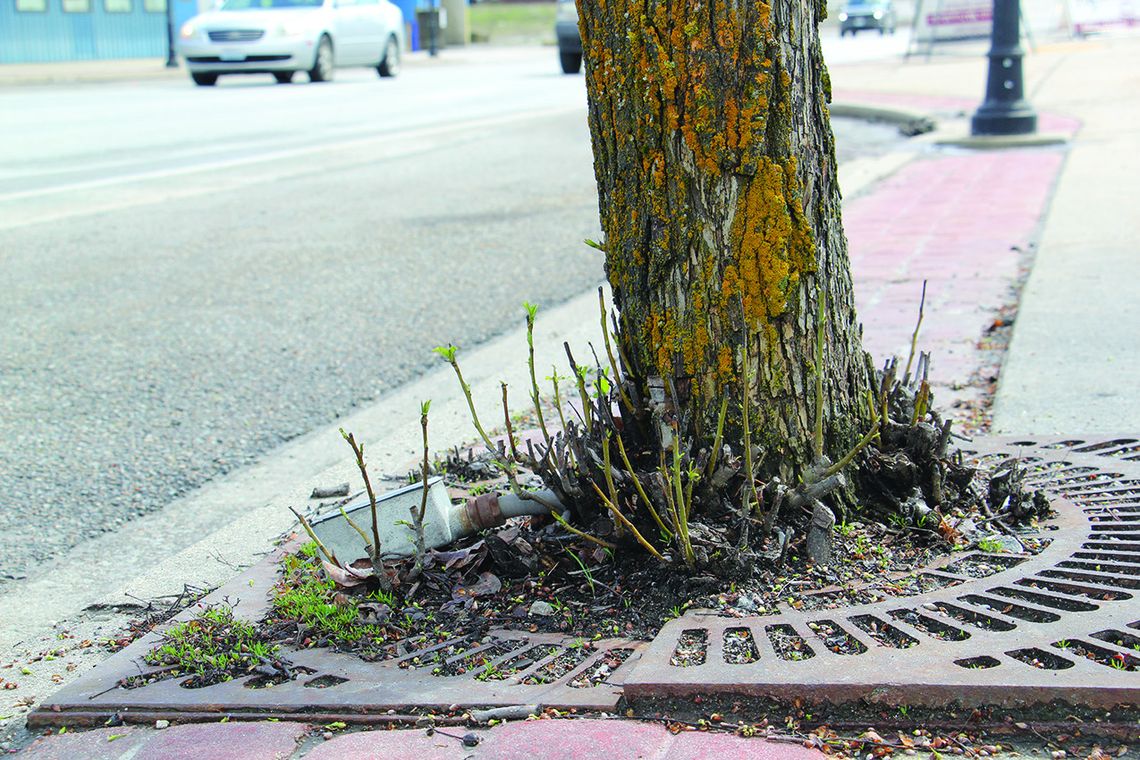
NEWPORT — For years, the trees lining Washington and Union Avenues in downtown Newport have provided the city with shade, fresh air and natural beauty.
Then in 2024, Joyce Weir and Linda Cassella’s discovered that certain trees showed evidence of root heave — damage to sidewalks caused by roots without enough resources to grow underground. By then, the city had already removed many of the trees, but replaced none of them.
“We want to see our town be beautiful,” Cassella said. “And the dying trees are not projecting that kind of beautiful image.”
With support from then-council member Ken Smith, she and Weir approached the Newport City Council as concerned citizens in August 2024. There, they shared their concerns, along with the results of an informal survey they conducted of the trees beforehand.
They found that, of the 84 trees that stood downtown, only 57 were left. About 22 trees appeared to have been removed, and an additional 15 trees remained only as stumps, some of which posed a safety hazard.
Moreover, only five of the 57 trees left were still healthy and not in danger of trunk girdling — their grates cutting them off from water. Roots were growing through or damaging the grates of about 12 trees, causing root heave, another safety hazard. Eight trees had bare limbs, which may indicate stress.
“Some of the grates were falling apart, making it hazardous,” Cassella said. “Other grates were in place, but they were choking the trees.”
At their August 19, 2024 meeting, the city council decided to remove all the grates — a labor-intensive process, according to the meeting minutes. Meanwhile, city administrator Abby Gribi said she would research a replacement tree appropriate for the area, as a possible downtown revitalization project could involve such trees.
That meeting, Mayor Keith Campbell suggested the city consult the Creative District about the trees. However, that has yet to happen.
“We kept waiting and waiting and hoping something would be done,” Weir said. “But what was done was they just took down more trees.”
The trees were planted in the spring of 1999, as part of a project to renovate Washington and Union Avenues in downtown Newport.
Now, Gribi said the city has more priorities, such as the roads and water and wastewater systems. The city is working toward replacing the trees as well, but does not have the staffing or funding to do so. Instead, city crews are removing diseased or broken trees while maintaining the trees left.
The city council addressed the trees at their Monday, April 20 meeting. Council member Nathan Longly re-discussed the idea of community-sponsored planters, which may compensate for the removed trees.
Upon replacement, Gribi said the city will reference its Comprehensive Plan, which will include community-informed guidance on design and goals and policies related to beautification. The Comprehensive Plan is due for adoption by June 2027.
“Once we get to that stage of a project and have that identified, then we’ll go through and identify the best types and work with council on that,” Gribi said.
Kyle Groom, a hazardous tree expert who specializes in tree removal, and a few licensed arborists in the area identified the trees as a breed of flowering pear or dogwood.
Groom himself suspects they are flowering pears, which have a lifespan of 15–20 years. At seven years past their life expectancy, the trees may now be dying from old age, Groom said. Contributing factors include trunk girdling and downtown Newport’s urban environment shortening the trees’ lifespan.
“The biggest hazard that we’re looking at right now is it breaking the sidewalks due to root heave with mature trees,” Groom said.
Additionally, Gribi said the trees are inappropriate for Newport’s streets. Many have branches that easily break under precipitation, or roots that are incompatible with city tree pits. The city may use the same breed for replacement, but genetically modified to fit city needs.
Groom recommends the city use a similar breed with a lifespan of about 25 years. For downtown Newport, a semidwarf tree breed is best, as Groom said they grow up to 25 feet in height and provide more shade and wildlife habitat than ornamental trees. A flowering tree would live longer than a fruit-bearing one.
“Getting a different variety of flowering colors or whatever leaf patterns the community wants would be the best avenue to go forward,” Groom said.
When replacing a tree, city crews must dig 2–3 feet down to remove all prior wood and organic material, then replace the soil, Groom said. Instead of grates, Groom and the licensed arborists recommend installing rubber mats, which not only stabilize the dirt but also expand around the trees as they grow. Consequently, rubber mats ease the process of trimming trees, avoiding root heave.
Gribi estimated one replacement tree to cost as much as $1,000–2,500, with labor costs depending on whether the labor is conducted by city crews or a contractor. That means the city needs upwards of $84,000 to replace all 84 trees.
At least some of those costs can be funded by grants, Weir and Cassella said. Rather than replace all the trees at once, Groom said the city can implement a plan to replace a certain number of trees over time like the City of Spokane.
“For a cost benefit, there’s probably almost none,” Groom said. “But for an enjoyable walk down Main Street, I think that there’s a pretty large benefit there.”
For many citizens, an enjoyable walk is not their only benefit from the trees downtown.
Beautification via trees can attract residents, tourists, events and businesses — all of which Newport needs, as many businesses in downtown Newport have closed, Weir and Cassella said.
In Spokane, trees also increase marketability and property values while decreasing crime rates, according to the City of Spokane website.
Environmentally, trees convert carbon dioxide into oxygen, reduce air and noise pollution and otherwise contribute to nearby ecosystems.
“I realize they’re busy and have other projects that require their attention,” Cassella said. “But I think that having a beautiful downtown will help the economy of the city.”