.png)

Age: 66 Profession: Retired Business Owner / Construction Executive Town of Residence: Usk 1. What experience do you have that makes you qualified to serve as Pend Oreille PUD commissioner?
For more than 46 years, I owned and operated a multi-million-dollar construction company that managed complex public and private projects throughout Washington, Oregon, Alaska, and Hawaii. During that time, I was responsible for budgets, longterm planning, regulatory compliance, contract negotiations, and leading teams of more than 75 employees.
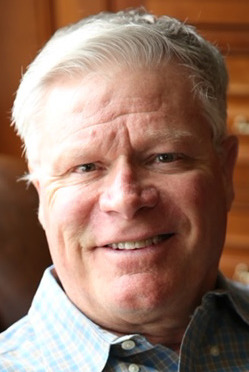
A PUD commissioner’s job is not to manage the utility’s day-to-day operations, that is the General Manager’s responsibility. A commissioner’s role is governance: setting policy, ensuring financial accountability, representing ratepayers, and planning for the future. Those responsibilities closely match the work I have done throughout my career.
I am retired, which means I have the time and flexibility to attend meetings, travel to Olympia when necessary, and advocate for Pend Oreille County. I am running because I believe our ratepayers deserve experienced, engaged representation that puts their interests first.
2. What has the current board of commissioners done right? What have they done wrong?
The current board deserves credit for maintaining one of the most reliable and affordable public power systems in the state. Our PUD has invested in infrastructure, maintained local control of our electric system, and continued to provide quality service to our communities.
Where I believe improvements are needed is in preparing for the future. The regulatory environment is changing rapidly, and decisions made in Olympia increasingly affect rural utilities. Our county needs commissioners who are willing to spend time building relationships with legislators, public utility organizations, and other PUDs to ensure rural communities have a strong voice before costly mandates become law.
I also believe transparency and communication with ratepayers should continue to improve. The public deserves to understand not only what decisions are being made but why they are being made.
One of my opponents argues that he deserves this position because he has lived here the longest and knows everyone. I see that as a major concern, not a qualification. A commissioner’s duty is to represent every ratepayer fairly, even when that means making difficult decisions that may disappoint friends, long-time acquaintances, or political allies. The job requires independence, not personal loyalty.
3. What do you see as the single biggest issue facing Pend Oreille County residents as it pertains to the PUD?
The Right Deal for Pend Oreille County The job of a PUD commissioner is not to simply approve projects or reach agreements. The job is to negotiate the right deal. One that protects the people who pay the electric bills.
A good negotiator never walks into a meeting believing the deal has to happen. The moment you become desperate to make a deal, you lose your leverage. Every agreement should be measured by one question: “Is this the best deal we can secure for the ratepayers of Pend Oreille County?”
That mindset will become increasingly important over the next several years.
The Seattle City Light agreement, future wholesale power arrangements, infrastructure investments, and the increasing interest from large industrial customers and data centers will all require experienced negotiation and sound business judgment. These are not routine decisions, they are decisions that will affect electric rates for decades.
All eyes are on Pend Oreille County!
Our affordable electricity, abundant water, available land, and reliable transmission system have made our county attractive to large power users. That interest creates opportunity, but it also creates responsibility.
The PUD commissioner does not decide which lawful businesses receive power. However, commissioners do help establish policies and oversee the utility’s long-term direction. They must ensure that growth benefits our community instead of placing additional costs on existing customers.
When major industrial customers require new substations, transmission upgrades, or expanded infrastructure, those costs must continue to be supported by the customers creating the demand, not shifted onto local families, retirees, and small businesses.
That is what protecting the ratepayer looks like.
Strong representation also matters when negotiating with larger organizations and government entities. The people sitting across the table represent sophisticated interests with experienced negotiators. Pend Oreille County deserves someone who can evaluate proposals, recognize hidden costs, ask difficult questions, and negotiate from a position of strength.
The goal isn’t simply to sign an agreement.
The goal is to secure the best possible agreement for Pend Oreille County.
If we negotiate well, we protect affordable electricity, encourage responsible economic growth, and preserve our quality of life.
If we negotiate poorly due to inexperienced commissioners, the consequences will last for decades further driving our youth from this area.
Every additional cost that is unnecessarily shifted onto the utility eventually shows up on someone’s electric bill.
Think about your own household budget.
Could you afford $250 every month for electricity?
For many families on fixed incomes, young families just starting out, and local businesses operating on tight margins, that kind of increase will be catastrophic.
District 2 voters are choosing who will represent Pend Oreille County when these critical decisions are made. They are choosing who will sit at the negotiating table, who will ask the hard questions, and who will refuse to accept a deal that isn’t in the best interest of the people paying the bills. That’s why this election is so important.
4. Where would you like to see the PUD in the next five, 10, and 20 years?
Over the next five years, I want to see the PUD continue investing in system reliability, maintaining low rates, and strengthening its presence in Olympia so rural ratepayers have a stronger voice in state policy.
In 10 years, I would like to see continued modernization of our electrical infrastructure, careful financial planning, and policies that encourage responsible economic development without shifting costs onto existing customers. I also believe utility divisions should be financially sustainable so electric ratepayers are not unnecessarily subsidizing unrelated services.
In 20 years, I want Pend Oreille PUD to remain a locally controlled, financially strong public utility that continues delivering reliable, affordable power while adapting to new technologies and changing energy demands. Most importantly, I want future generations to inherit a utility that is still owned by the people it serves and focused on the needs of its ratepayers rather than outside interests.