.png)

 Sophia Aldous
NEWPORT – Wildfire has gotten an early and unsettling start in Eastern Washington and Northern Idaho, with five fires in Pend Oreille County between Thursday, July 23 and Tuesday, July 28. Officials on both sides of the border are advising residents use caution and diligence, especially in rural areas.
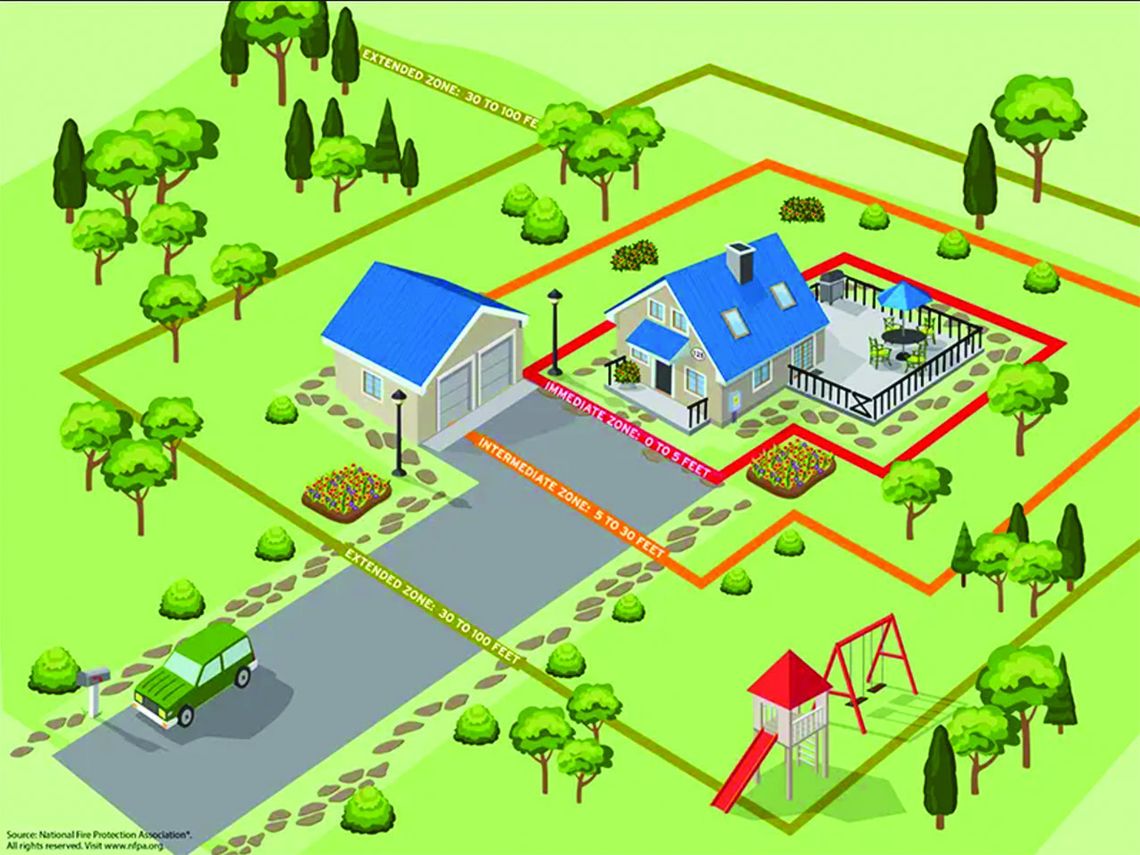
“It’s a hard fact that there is no amount of firefighting resources that will save your home if it is in the path of a catastrophic wildfire,” said Chief Shane Stocking, of the South Pend Oreille Fire and Rescue District. “It’s unfortunate, but it’s something of a given now that these wildfires aren’t just an incident; they are a season. The best thing people can do is prepare their home.”
For the record, when Stocking uses the word “catastrophic,” it is not referring to the fires that started between last Thursday and Tuesday. The largest one along Highway 2 and 211 reached 12 acres and some evacuation notices were issued, but no structures were lost. According to the Department of Natural Resources, that fire was started in a freak accident when three birds alighted on a powerline, causing it to arc. All the other fires are under investigation.
“My goal isn’t to scare people but inform them so they can be prepared as best as possible,” Stocking said. “When I use the word catastrophic, I mean like the Palisades Fire last year in California or the Hawaii wildfires in 2023. We will do our absolute best to protect homes and people, but in the face of fires like that, the best thing to do is not be there.”
The two biggest fires in Eastern Washington in 2023 were the Gray and Oregon Road fires, destroying 369 homes and damaging another 447. The fires burned more homes than any wildfire in Washington state history at the time, according to a letter from former Governor Jay Inslee to former President Joe Biden. The two fires, which spread from August 18 to August 25, killed two people. The Oregon Road Fire started in Spokane County and burned into southern Pend Oreille County, requiring multi-county emergency response and evacuation zones.
Stocking confirmed that two SPOFR firefighters who had been injured in the Chelan Hills Fire on July 4 recently returned to duty. As of July 28, SPOFR has 11 firefighters assigned to wildfires across the state.
“We need all of our constituents to be vigilant,” Stocking said. “This is July and we’re already burning at an unprecedented rate. Please, listen to your fire districts, follow burn bans, be mindful – it’s so important to be careful.”
In April, the Washington Department of Ecology declared a drought for all watersheds in the state, “due to low snowpack and multiple years of precipitation deficits.” This is the state’s fourth drought declaration in a row, with lack of snowpack and precipitation making for drier conditions that result in more natural fuel for wildfires.
Though the fire season has not intensified at Priest Lake as it has in other places, it’s become an unsettling neighbor. The Upper Smith Fire that started in bordering Boundary County after a lightning strike July 8 has grown to 1,573 acres on the Idaho Panhandle National Forest as of Tuesday, July 28, and was reported at 15% containment according to InciWeb. Smoke and ash from that fire and the Turner Hill Fire, also in Boundary County and at 100% containment as of July 28, poured over into Bonner County earlier this month.
“This is definitely the time of year when we keep the conversation going about emergency preparedness,” said Cameron LaCombe, Bonner County Emergency Management Preparedness Coordinator.
U.S. Forest Service planes and helicopters were actively scooping water from Priest Lake and other waterways to drop on the Upper Smith Fire for several days. As of this publishing, there have been 11 wildfires reported in Bonner County, but all have been relatively small and were put out quickly. One was in Oldtown, earlier this month when a man was using a Sawzall to cut car parts at his home and the sparks from the saw ignited a grassfire. LaCombe said the man’s neighbors noticed the smoke and called 911. West Pend Oreille Fire District responded, quickly putting out the fire. Idaho Department of Lands responded to a small wildfire on Sundance Mountain and Soldier Creek near Priest Lake July 18, but it was quickly extinguished.
The worst wildfire to hit Bonner County since the Big Blowup of 1910 was almost 59 years ago. The Sundance Fire left scorched earth and two firefighters dead near Priest Lake in September 1967. Caused by lightning strikes, the fire burned more than 55,910 acres in nine hours, generating winds of 60 mph with gusts between 95-120 mph, according to news reports at the time. The blaze overtook firefighters Luther Rodarte and Lee Collins who died as they constructed a dozer line.
Priest Lake and the greater Bonner County area have had plenty of wildfires since then, but nothing on that scale.
“We have had no major wildfires in our county or district so far this year, and since I’m not sitting near any wood, I’ll knock on my plastic chair,” said Tom Renzi, East Priest Lake Fire Protection District chief.
There are four primary fire districts protecting the Priest Lake area: West Priest Lake Fire District, Coolin-Cavanaugh Bay Fire Protection District, North of the Narrows Fire District, and East Priest Lake Fire Protection District. Including the lake and the area surrounding it, there are tens of thousands of acres, not counting the 523,000 acres of forested public lands.
The U.S. Census Bureau estimates about 2,700 total households in the immediate area with a population of 6,913. The lake is a popular tourist destination in the summer. While there is no public data tracking the exact number of Spokane residents who own properties at Priest Lake, regional news reports indicate that a majority of the lake’s non-resident cabin and second homeowners come from the Inland Northwest, especially Spokane.
“Priest Lake is a beautiful area, though on the flip side, if there is a significant fire event, and your home or vacation spot takes you north on Highway 57 to the east or west side of the lake, that’s your only way in and out,” LaCombe said. “Roads get narrow, cell service can be a challenge. If there’s ever a need for evacuation, that can be a concern.”
West Priest Lake Fire District Chief Troy Gilbert said it’s never too late for people to prepare their homes for fire season and be prepared for possible evacuation.
“The thought can feel overwhelming, but if you’re unsure, the best thing you can do is call your fire district and let them help you find out where to start,” Gilbert said. “That’s the reason we’re here.”
For more information on wildfire prevention and preparedness, go to www.bonnercountyid.gov/ departments/EmergencyManagement. For free home wildfire risk assessments, contact your local fire district, or Idaho Department of Lands (www.idl.idaho. gov/fire-management) for Idaho residents or the Department of Natural Resources (www.dnr. wa.gov/wildfire-resources/wildfire- prevention/wildland-fire-protection- strategic-plan) for Washington residents.
SOPHIA MATTICE-ALDOUS IS A MURROW NEWS FELLOW WORKING DIRECTLY WITH NEWSROOMS AT THE NEWPORT MINER AND RANGE MEDIA THROUGH A PROGRAM ADMINISTERED BY WASHINGTON STATE UNIVERSITY. HER REPORTING IS AVAILABLE FOR USE VIA CREATIVE COMMONS WITH CREDIT.