.png)

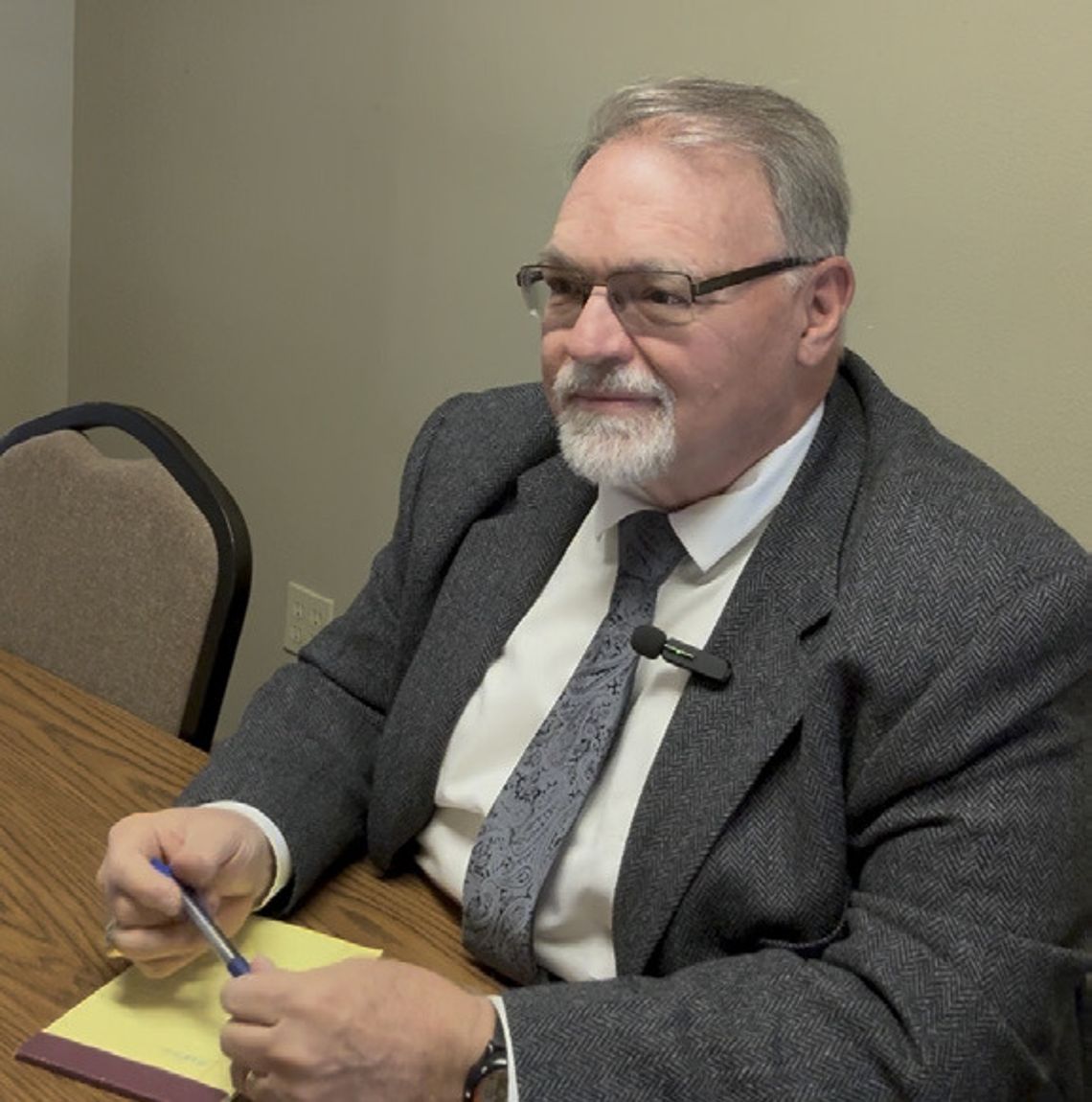
NEWPORT – Ernie Hood, a 68-year-old Deer Valley resident with a background in technology management, finance and strategic planning, is running for Pend Oreille Public Utility District commissioner, District 2. The current District 2 commissioner, Curt Knapp, is not seeking re-election after 24 years in office. Hood is running against David Bradbury for the non-partisan, six-year seat.
Hood said he became interested in the PUD after moving to the area about eight years ago. Before that, he said, he and his wife, Karen, had lived in places served by investor-owned utilities, including Texas, where he recalled paying about 20 cents per kilowatt-hour for electricity.
When he received his first electric bill in Pend Oreille County, the rate was 5.11 cents per kilowatt-hour, he said. Learning that the utility was publicly owned prompted him to look more closely at how the PUD operates.
“I was an owner and I didn’t realize it,” Hood said.
Hood became more involved after the PUD announced a rate increase and said he wanted to understand the utility’s finances and operations. Current PUD Commissioner Dave Rick, District 3, encouraged him to consider running, Hood said.
“I think it’s all about stewardship,” Hood said. “I think it’s important that we keep the PUD, that it doesn’t become an investor-owned utility, that we keep rates as low as we can.”
Hood said affordable electricity benefits residents and can help attract businesses to the county. He believes his professional experience would allow him to contribute to the utility’s oversight.
Technology and management background
Hood served 10 years in the U.S. Navy, working as an electronics technician specializing in satellite communications aboard the USS Dubuque, which operated out of San Diego. He later transferred to work with advanced military equipment in the intelligence field, where he said he gained technical and leadership experience.
After leaving the Navy, Hood worked for Intergraph Computer Systems, servicing equipment in Pennsylvania, New Jersey and Delaware. He completed his bachelor’s degree and later moved into project management and other roles in the technology industry.
He was recruited to Compaq Computer Corp. in Houston and spent 17 years with the company and its successor, Hewlett-Packard. During that time, he earned a master’s degree in business administration with a concentration in marketing, with additional experience in finance and business planning.
Hood said one of his most significant professional accomplishments came while working in the server division, where he was part of a team charged with identifying new markets and opportunities for growth. The division’s business grew from about $11 billion to $15 billion during the period he described.
After moving to New Mexico and later moving to the Northwest with his wife, Hood worked as a project manager for Jet Seal and Keytronic. His final project involved the Boeing 737 Max program. He said the COVID-19 pandemic and the resulting decline in air travel led to his layoff and early retirement.
Hood said his career gave him experience with budgets, longrange planning, strategy and evaluating business decisions, skills he considers relevant to the work of a PUD commissioner.
Focus on budgets and rates
Hood said understanding the PUD’s budget would be his primary responsibility as a commissioner because spending decisions ultimately affect electric rates.
Everything from vegetation management and equipment replacement to undergrounding power lines and major projects must be considered within the budget, he said. Commissioners should understand the assumptions behind proposed spending and ask questions when management requests funding.
“I should be able to ask questions,” Hood said, explaining that he would want to understand why an expense was necessary and how it fit into the utility’s longterm plans.
Hood said he believes the PUD is taking appropriate steps in several areas, including vegetation management, outage response and modernization. He pointed to the utility’s use of software to identify outages more quickly and its investment in newer equipment.
The PUD maintains about 1,400 miles of lines and related infrastructure across the county, Hood said, and aging equipment will require continued maintenance and replacement.
He acknowledged that maintaining reliability while keeping rates low can be difficult. Inflation, rising material costs and long waits for equipment such as transformers can put pressure on utility budgets, he said.
The goal, Hood said, should be to deliver electricity at the lowest possible cost while maintaining the highest possible reliability. He also supports undergrounding lines in areas at greater risk of wildfire, saying those investments can help protect homes and reduce the risk of costly damage.
Hood also criticized the timing and size of a salary increase for PUD General Manager Chris Jones. Hood said he objected to Jones requesting a 15% raise request made within seven months of Jones signing a contract for a set amount and term.
He said he recognizes that employees can earn raises for good performance but was concerned about the size of the increase in a county he described as not particularly wealthy. Hood said he could not identify other past PUD decisions he would change because he did not have access to all the information and reasoning behind them.
Data center expansion and transparency
Hood said transparency should be central to the PUD’s handling of Merkle Standard’s reported interest in expanding its operations at the former paper mill property in Usk.
He supports economic development but said existing customers should not have to subsidize the electricity and infrastructure needs of new industrial customers.
“I don’t want to subsidize growth at the expense of our ratepayers,” he said. Hood supports maintaining requirements designed to ensure large customers provide for their own power needs and infrastructure. He cited electric service agreements and letters of credit as tools that can help protect the PUD if a business fails to meet its obligations.
He also said economic development should involve coordination among the PUD, the county, the port district, the Kalispel Tribe and organizations such as the Economic Development Advisory Council.
Hood said he was disappointed by changes in the plans announced for the former paper mill property. He recalled expectations that the operation would retain more than 100 jobs, along with plans for Bitcoin mining, and said he has concerns about the number of jobs ultimately created and the direction of the project.
He said he understands that data centers can generate construction employment but may require relatively few permanent employees once operational.
Hood also raised questions about whether the company is meeting its tax and regulatory obligations, while acknowledging that he does not know all the details. He said he wants more information about the company’s plans and its potential effects on the community.
As a commissioner, Hood said, he would seek more information from the company and work to ensure discussions about major proposals are handled transparently. He also said residents and local officials should have a clearer understanding of significant development activity in the county.
He said the reported private meeting between Chris Jones and Merkle officials was “totally unacceptable.”
Reliable, affordable electricity and broadband service are two ways the PUD can help make the area attractive to businesses, Hood said, but he does not believe existing ratepayers should bear the costs of a private company’s expansion.
Campaign and community involvement
Hood said he is self-funding his campaign under the state’s mini-reporting option and has received some smaller gifts from individuals. He said neither he nor his campaign has received money from Merkle Standard or its sister companies.
Asked whether he had received or been promised financial compensation, gifts or incentives from an outside company in connection with a potential election, Hood said no.
“I wouldn’t take it,” he said, adding that he wants to avoid obligations to individual donors or other interests.
Hood has attended PUD meetings since the utility began discussing its rate increase earlier this year. He said Rick has helped him learn about the commission’s responsibilities and time commitments and suggested people he could consult about the job. When considering technical proposals, Hood said he would seek input from subject matter experts, utility staff and people with relevant experience. He also would conduct his own research.
“I don’t purport to know everything about everything electrical in the PUD,” he said.
Outside his professional career, Hood said he is a member of the Veterans of Foreign Wars and the American Legion, participates in the Community Emergency Response Team and is involved with a radio club. He said amateur radio operators can help relay messages across county lines during emergencies when conventional communications fail.
Hood also serves as an elder at Harvest Community Fellowship. He and his wife have been married for 46 years and have two adult children: a daughter who is a registered nurse in Houston and a son who serves as a Navy chaplain aboard the USS Cole.
Hood said he has relied on social media to communicate with voters and explain his positions, in part because he is uncomfortable going door to door.
“I’m not a politician,” he said. “But I really believe that I have the skill set, the education, the background to be able to be a good commissioner and to get back to my community.”