GUEST OPINION
Casting the ballot has always been important for me.
As a young child, my dad and I helped my mother set up for the polls at the local Methodist Church for each election. I knew this was something important and could hardly wait to be able to cast my own vote. After the 26th Amendment was ratified on July 1, 1971, I was able to do so. Over the years I voted in every election, wherever I lived. I guess I really took participating in voting for granted growing up in rural Washington. A few years ago I began to research racial issues in America. It was through my reading and my travel that I realized how privileged I had been to never have to worry about being turned away at the polls or whether my vote would count.
In 2024 I participated in the Presbyterian Peacemaking Program Civil Rights Legacy Tour. It was through the people I met and places I visited that I gained a new perspective on the right to vote for all. I met people who were willing to risk everything, even violence, to bring that issue to the American public. I heard from a woman whose house was bombed in Birmingham (her father was a prominent Civil Rights attorney), a man injured in a bomb at his college, others who were in the Children’s March (1963, Birmingham, AL) facing vicious dogs, water cannons and arrest. All for the vote.
While I was having tea parties with my dolls and attending a safe elementary school, they and their families were putting everything on the line. The Civil Rights Act of 1965 opened the ballot officially to Blacks, however it took years to make it do. Native Americans fought for that right into the 1960’s as well. I never knew.
At the end of the Legacy Tour, leaders asked each of us to consider what we were going to do with what we had learned. I felt a strong calling that I needed to be involved in securing the vote in the fall, but Washington is such a “boring” state with mail in voting, there seemed to be little I could do to add to the effort.
Two weeks after I got home, the ad came out in Sojourner’s Magazine (non-denominational faith publication aimed at justice issues). Faiths United to Save Democracy was seeking ordained clergy and lay people to stand with those going to vote in precincts that they deemed vulnerable or at-risk for disruption or voting issues.
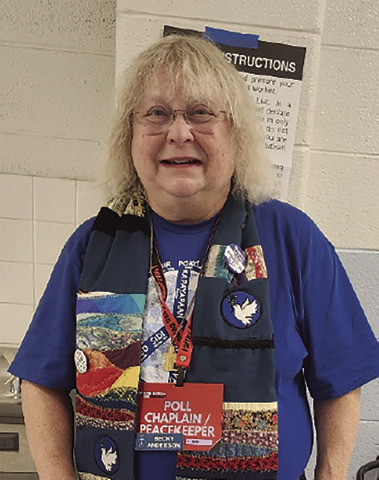
I signed up, trained, bought my ticket to Mobile, Alabama (granddaughter lived there!) and became a poll chaplain at a local predominantly black school. I encountered few problems. I mostly reassured and thanked voters (and their children who came along) that it was great to see them casting their ballots.
Fast forward two years, 2026. The call went out and I signed up early, this time for the Dallas, Texas, area (another granddaughter)! Our training has been very different this time around with more emphasis on how to be a calm, affirming presence to voters in our assigned precinct in the face of new disruptions of registrations and the potential of federal troops or ICE agents on the scene. Texas has become a fraught area with threats to voters including removal of dozens of local polling places in nearby Tarrant County and a rhetoric of chaos. Leaders in that state say they don’t know what to expect on Election Day with the landscape changing daily. But as people of faith we will be there.
I still believe our votes can and will be fairly and freely cast and I am committed to being that presence that stands with voters of all backgrounds and helps ensure they safely can cast their ballot. Our nation was established that “all are created equal” and as I view each person as created in the image of God, I will do all I can to honor that and protect that.
I do, however, expect I will have more stories upon my return from Texas!
And one last word: don’t take voting for granted, cast your ballot and call a friend or family member and encourage they to do the same. It matters.